Rituals, Ayurveda, and the Art of Honoring Change
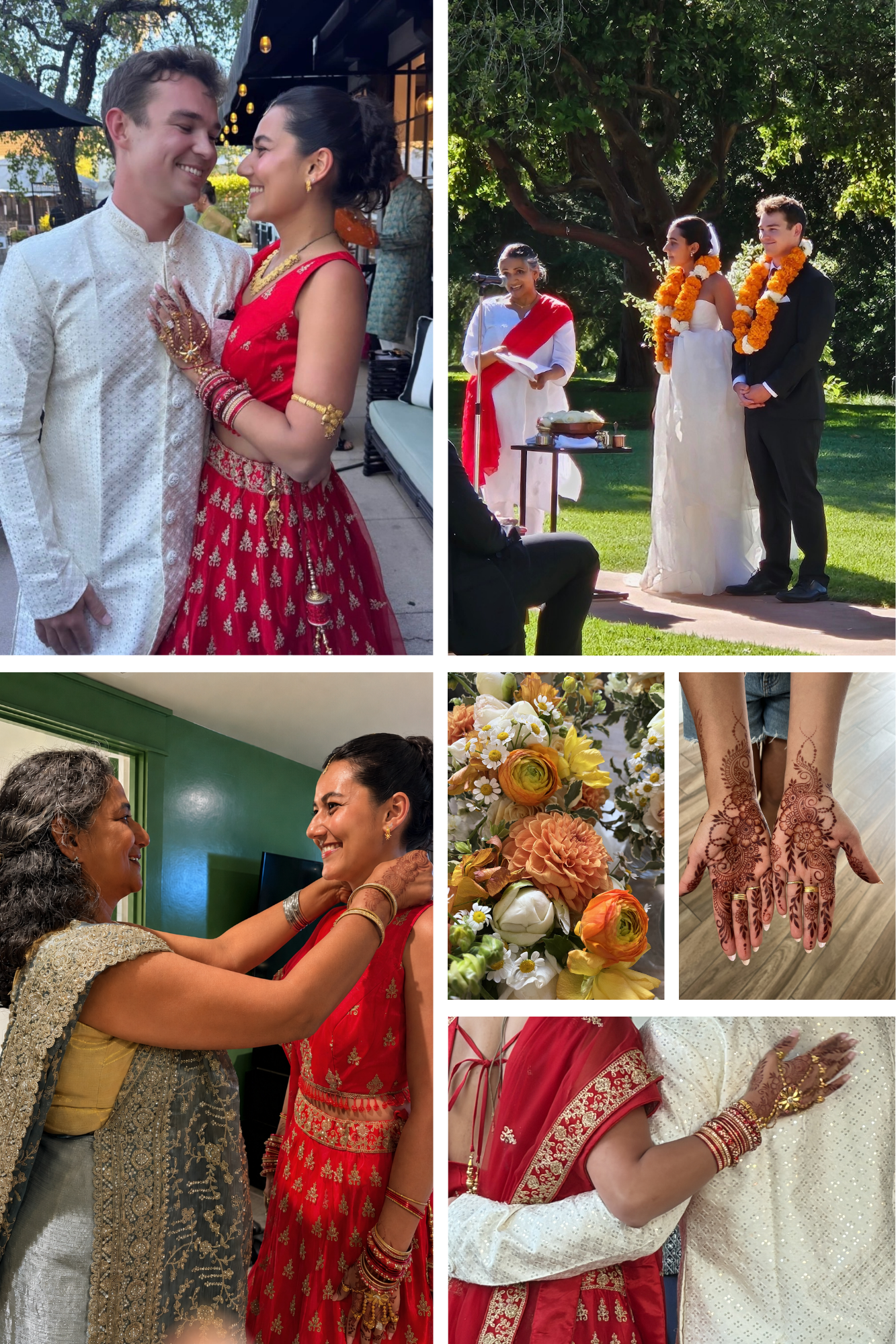
I recently returned from my daughter’s wedding, and in the days since, I have found myself reflecting not only on the beauty of the celebration, but on the power of ritual itself. Growing up in an Indian family, rituals were always present. There were blessings, offerings, mantras, symbolic gestures, and ceremonies that marked important moments in life. When I was younger, I didn’t always understand their meaning. At times, I simply saw them as tradition. But with age, life experience, and my work in Ayurveda, I have come to understand that rituals are much more than customs. They are intentional practices that help us pause, bring our awareness to what matters, and honor the transitions we are moving through.
During the wedding ceremony, there were moments that invited us to slow down and pay attention. There were blessings offered, symbols exchanged, and gestures that represented support, commitment, protection, and the joining of two lives. In many Vedic ceremonies, there is a sacred fire, offerings, prayers, and vows. Each part has meaning. Each act brings attention to something deeper than the visible moment.
And this is what ritual does.
Ritual takes something meaningful and gives it form.
It allows us to move from thought into embodied experience. We may understand love, commitment, gratitude, or transition in our minds, but ritual helps us feel it in our bodies. It gives us a way to mark change, to honor what came before, and to consciously step into what is next.
In Ayurveda, this is very important. Ayurveda teaches us that we are deeply influenced by rhythm, environment, season, time of day, and the quality of our daily choices. The nervous system responds to repetition, consistency, intentional pauses, and self care rituals. This is why daily routines, or dinacharya, are such an important part of Ayurvedic healing.
When we wake at a consistent time, scrape the tongue, drink warm water, sit quietly, breathe, move the body, apply oil to the skin, or prepare nourishing food, these are not just “tasks.” When done with awareness, they become rituals. They become ways of reminding the body: I am here. I am safe. I am listening.
This is one of the places where I think modern life has lost something important. We often move quickly from one thing to the next. We check the phone before we check in with ourselves. We rush through meals, conversations, transitions, and even rest. But the body and mind need moments of pause. They need signals of rhythm. They need practices that help us return to balance, to remind us of the present moment.
Ritual does not have to be elaborate. It does not have to belong to one religion, culture, or tradition. A ritual can be lighting a candle before meditation. It can be making tea in the morning and taking the first few sips in silence. It can be placing a hand on the heart before beginning the day. It can be offering gratitude before a meal. It can be taking a few breaths before responding to an email, entering a room, or going to sleep.
What makes it a ritual is not the size of the act. It is the attention we bring to it.
From an Ayurvedic perspective, rituals can also help balance the doshas. For Vata, ritual offers grounding and steadiness. For Pitta, ritual can soften intensity and create space. For Kapha, ritual can bring lightness and movement. In every case, ritual helps us become more aware of our inner state and more connected to what we need.
Watching my daughter begin this new chapter reminded me that life is full of thresholds. Some are big and visible, like a wedding. Others are quiet and personal: a new season, a health change, a loss, a beginning, a decision, a healing process, a shift in identity. Ritual helps us honor these thresholds and hear their message, instead of rushing past them.
It gives the heart time to catch up with the change.
And perhaps that is why rituals have existed across cultures for so long. They help us remember that life is sacred, not only in the extraordinary moments, but in the everyday ones too.
So this month, I invite you to consider one simple ritual you can bring into your day. Choose something small. Something realistic. Something that helps you pause and reconnect.
Maybe it is your morning cup of tea.
Maybe it is a few breaths before sleep.
Maybe it is a moment of gratitude before you begin work.
Maybe it is oiling your feet at night.
Maybe it is simply stepping outside in the morning and feeling the sun on your face.
Whatever you choose, let it be more than another thing to do. Let it be a moment of attention. A moment of care. A moment of coming back to yourself.
Because when we bring intention to our daily practices, even the simplest acts can become healing.