The Art of Rest
Preparing for Seasonal Change
As the days begin to shorten here in the Northern Hemisphere, nature offers us an invitation to slow down. After a summer of long and hot days, the days become shorter and the temperature drops. In nature, plants slow down their growth and begin conserving energy for the cooler months ahead.
And yet, this time of year often asks the opposite of us. Our calendars become fuller as holidays begin to approach, and many of us move into one of the busiest seasons of the year. But our bodies are still connected to nature and craving the transition to more rest and slowing down.
One of the principles I return to often in Ayurveda is that our health is deeply connected to the rhythms around us. When the seasons change, our bodies are changing too. We may notice shifts in our energy, digestion, mood, or sleep. Rather than ignoring what the body is telling us, this can be a time to listen more closely.
Rest Is Medicine
We tend to think of rest as something we earn after we have finished everything else. Some even think of it as a waste of time. But from an Ayurvedic perspective, rest is a health practice. It’s even something that is ‘prescribed’ when needed. Rest is not inactivity. It is active restoration.
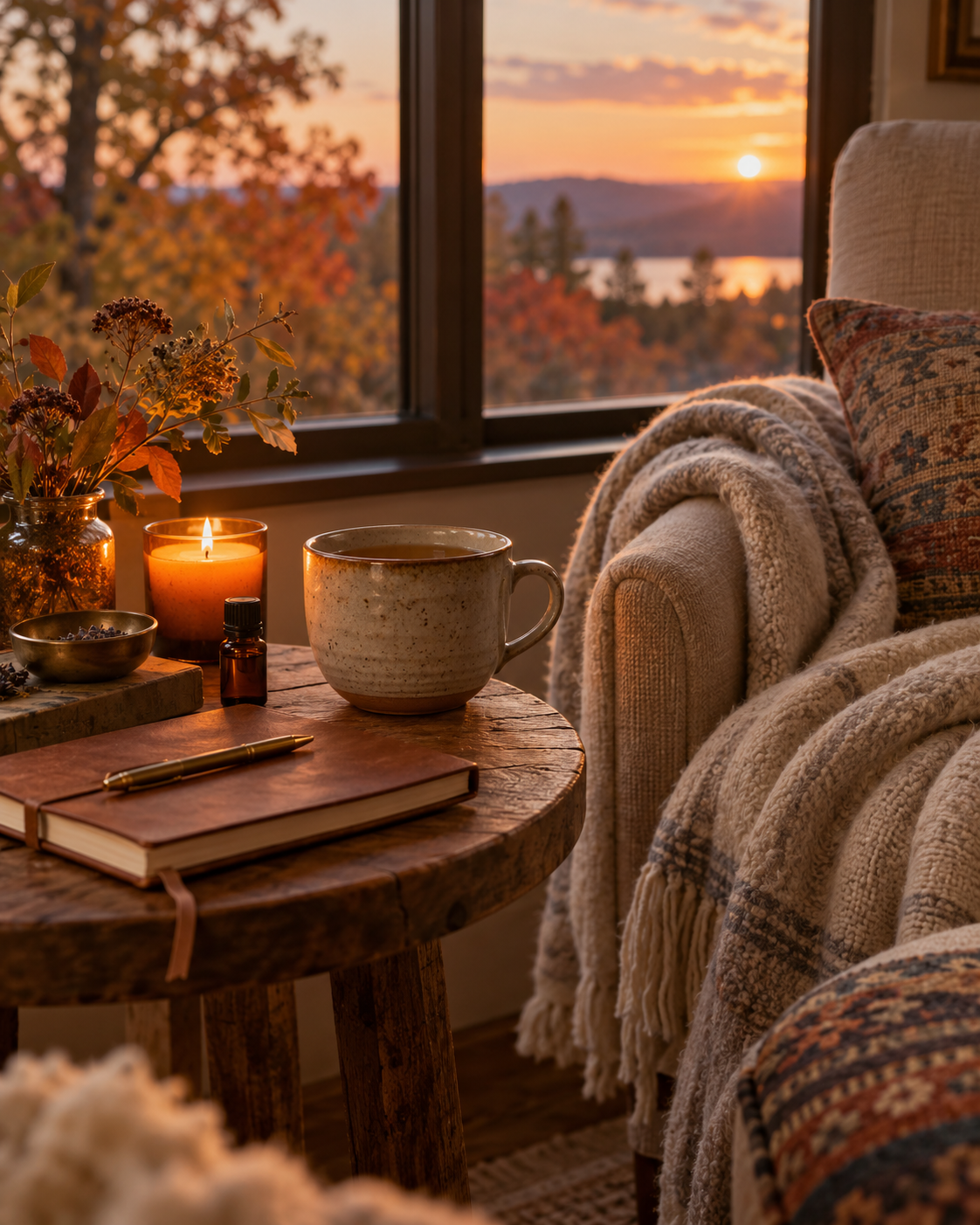
Rest can mean reducing the number of activities you plan in your week. It can mean taking breaks in the day to close your eyes and breathe for a few minutes. It can also be a few minutes of gazing out the window and observing the sky. And the deepest rest we can experience is sleep.
Sleep is one of the foundational pillars of wellbeing because it is during this rest that the body is best able to repair and restore. The nervous system and senses have an opportunity to withdraw from the constant stimulation of the day. Hormones and metabolic processes recalibrate. The mind sorts through what it has experienced, processes the information and consolidates it into memory.
And when we repeatedly deprive ourselves of rest, this work can’t be done effectively.
Every night, we have the opportunity to slow down, release the day, stop doing, and become still. Preparing for sleep becomes a form of self-care. It does not have to be elaborate. What matters most is creating a transition between the activity of your day and the state of rest you are asking your body to enter. Many of us move directly from emails, television, news, work, or scrolling into bed and then wonder why the mind can’t immediately become quiet.
Ayurveda gives us simple practices that can help us transition from activity to rest.
Creating a Bedtime Ritual
Your evening practice does not need to become another item on your to-do list. Think of it instead as a signal to your body: the day is complete.
A few simple rituals to try:
Dimming the lights as the evening progresses and allowing your environment to become quieter.
Reducing stimulation from screens so the mind can begin to settle.
A warm bath or shower, or a short breathing or meditation exercise before bed to calm the body.
A few minutes of journaling or reflecting on the day, along with soothing and calming aromatherapy in your bedroom, can settle the mind and set you up for deep rest.
A gentle foot massage with warm oil can be incredibly grounding, especially during the cooler, drier months.
A warm, caffeine-free drink can also become part of the ritual.
The purpose is less about finding the “perfect” routine and more about repetition. When we practice the same calming actions each evening, the body begins to recognize them as cues that it is time to rest.
The Connection Between Sleep and Immunity
As we move toward cold and flu season, rest becomes even more important as a way to keep our immune systems healthy. Sleep plays an important role in immune regulation and our ability to recover from illness. In Ayurveda, ojas is the subtle essence that is responsible for maintaining a healthy immune system. Ojas is created through nourishing food, emotional balance, healthy relationships, and adequate rest.
Science also tells us that sleep is necessary for a healthy immune system. In fact, research has shown that sleep loss reduces the activity of a type of immune cell, natural killer cells, which can increase the risk of viral infection. In addition, sleep loss reduces the production of antibodies, which also increases the risk of infections.
Let the Season Support You
Nature supports our need for rest during the fall and winter seasons.
The earlier sunsets become a cue to soften the pace of our evenings and to get to bed by earlier. Cooler temperatures encourage deep sleep. The natural world is conserving its energy, and we can give ourselves permission to do the same.
As the holidays approach, consider creating some space on your calendar for rest, before it becomes full. Consider scheduling an evening at home, a late morning without rushing, or declining an invitation to an event. Rest does not always require an entire day away. Sometimes it begins with small moments of spaciousness practiced consistently.
If you have read my book, Awakened Sleep, you know that sleep is a subject I care deeply about because it touches every aspect of our wellbeing, physical, emotional, and spiritual. And if you have not read it yet, this season may be a beautiful time to explore the practices I share around creating deeper, more restful sleep.
As we enter this next season, rather than asking yourself only what needs to be accomplished, ask yourself: “What would help me feel restored?”
Nature is already showing us the way.
And we are being given an invitation to rest.