The Intelligence of Plants
An Ayurvedic Perspective
In Ayurveda, and in many traditional healing systems, humans and nature are not seen as separate. Healing is rooted in our relationship with the natural world, especially the plant kingdom. Classical Ayurvedic texts describe thousands of medicinal plants and offer sophisticated guidance on how to prepare, combine, and use them safely and effectively. Rather than using isolated remedies, Ayurveda invites us to work within a complete, holistic system that honors both the intelligence of nature and the complexity of the human body.
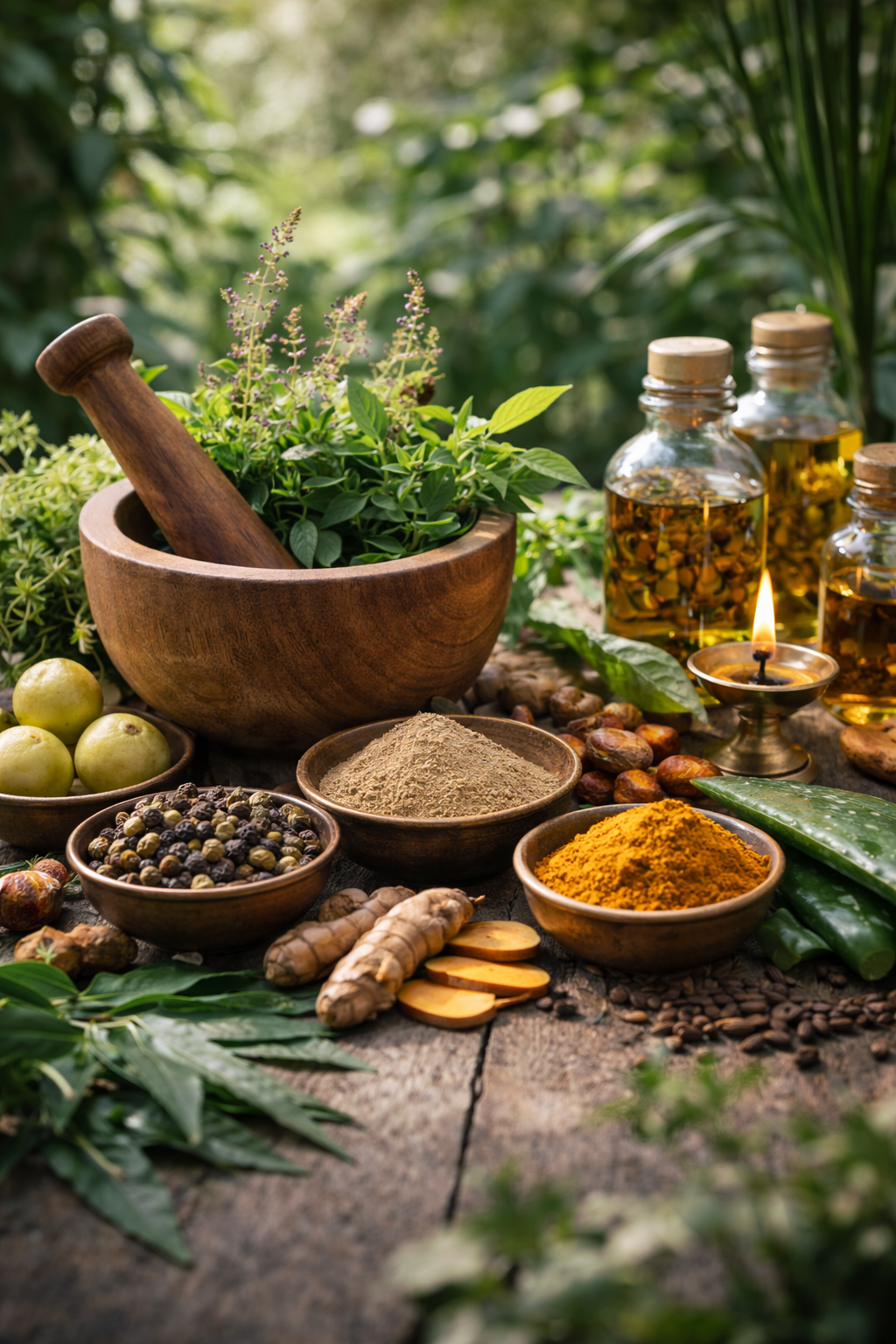
In my years as a physician, I have witnessed both the life-saving power of pharmaceuticals and the growing challenges of overuse and side effects. What drew me to Ayurvedic herbal medicine is its fundamentally different philosophy. Plants rarely act in a single, narrow way. An herb used for sleep may also support hormonal balance; a digestive herb may benefit the skin and immune system; and a detoxifying plant may simultaneously support liver function and gut microbial health.
This is because plants contain thousands of bioactive compounds—phytonutrients that interact with our cells and receptors in coordinated and supportive ways. Rather than forcing one biochemical effect, herbal medicine works with the body’s own healing mechanisms to optimize function. While medications and specific supplements are essential in many situations, using appropriate herbal options has allowed me to support healing more gently and with fewer long-term complications.
Nature’s Medicine: More Than Symptom Relief
In Ayurveda, herbs are not used only when something is wrong. They are also a form of nourishment. Just like food, plants help maintain resilience, support digestion and metabolism, and strengthen immune function. In addition to complex phytonutrients, many herbs give us the necessary vitamins, minerals, and anti-oxidants that our body needs to perform all its functions.
In addition, modern science is discovering that the molecules in these herbs communicate with our cells and modulate genes that control inflammation, mitochondrial energy production, repair DNA, and clean up cellular debris, to name a few. In addition, many Ayurvedic herbs have been shown to interact with the microbes in our gut to balance the microbiome and support gut health, digestion, and metabolism. A traditional herbal jam, known as chyavanprash, is a combination of several different herbs in a base of ghee (clarified butter). It is recommended to take one teaspoon of chyavanprash daily to stay healthy. I like to call it ‘the original multivitamin’, as it provides us with a daily dose of fatty acids, vitamins, minerals, and a host of nutrients that are important for overall health, all in the form of food that our body can readily recognize and absorb.
One of the most important roles of plants is their ability to support the body’s natural detoxification processes. Every day we are exposed to environmental chemicals through our air, water, food, and household products. Health depends not only eliminating exposures as much as possible, but on maintaining strong internal systems that can process and remove what the body does not need. Detoxification is not a single pathway. It is a coordinated process involving the liver, gut, kidneys, lymphatic system, and microbiome. These biochemical reactions require adequate vitamins, minerals, and nutrient cofactors. When nutrients are depleted or when elimination pathways are sluggish, toxins may accumulate and contribute to inflammation, hormone disruption, microbiome imbalance, and long-term disease risk. Plants are uniquely suited to support this process. They supply flavonoids, polyphenols, glycosides, saponins, tannins, fiber, sulfur compounds, and antioxidants that assist detoxification biochemistry, while also supporting healthy elimination through the gut and nourishing beneficial microbes.
Key Ayurvedic Herbs that Support Detoxification
Here are examples of classical herbs and plant foods used in Ayurveda that contain compounds known to support the body’s natural detox pathways:
Rhubarb root (Rheum rhabarbarum) – vitamin C, resveratrol, chromone glycosides, and polyphenols including gallic acid
Aloe vera (Aloe barbadensis) – vitamin C, folic acid, copper, magnesium, zinc, saponins, and fatty acids such as campesterol and lupeol
Turmeric (Curcuma longa) – magnesium, tannins, and polyphenols, including curcuminoids
Kutki (Picrorhiza kurroa) – phenolic glycosides, including picein and androsin
Neem (Azadirachta indica) – amino acids, sulfur-containing compounds, and flavonoids such as azadirachtin and nimbin
Gokshura (Tribulus terrestris) – flavonoids, quercetin, tannins, and saponins, including sulfated saponins
Amalaki (Emblica officinalis) – flavonoids, tannins such as emblicanin-A and emblicanin-B, and antioxidant compounds including quercetin
Psyllium husk – soluble fiber and polyphenols such as lignin
Flax seed (Linum usitatissimum) – copper, phenols, flavonoids, essential fatty acids, and vitamins C, B1, B2, and B6
Triphala – vitamin C, tannins, amino acids, and flavonoids such as quercetin, rutin, and luteolin
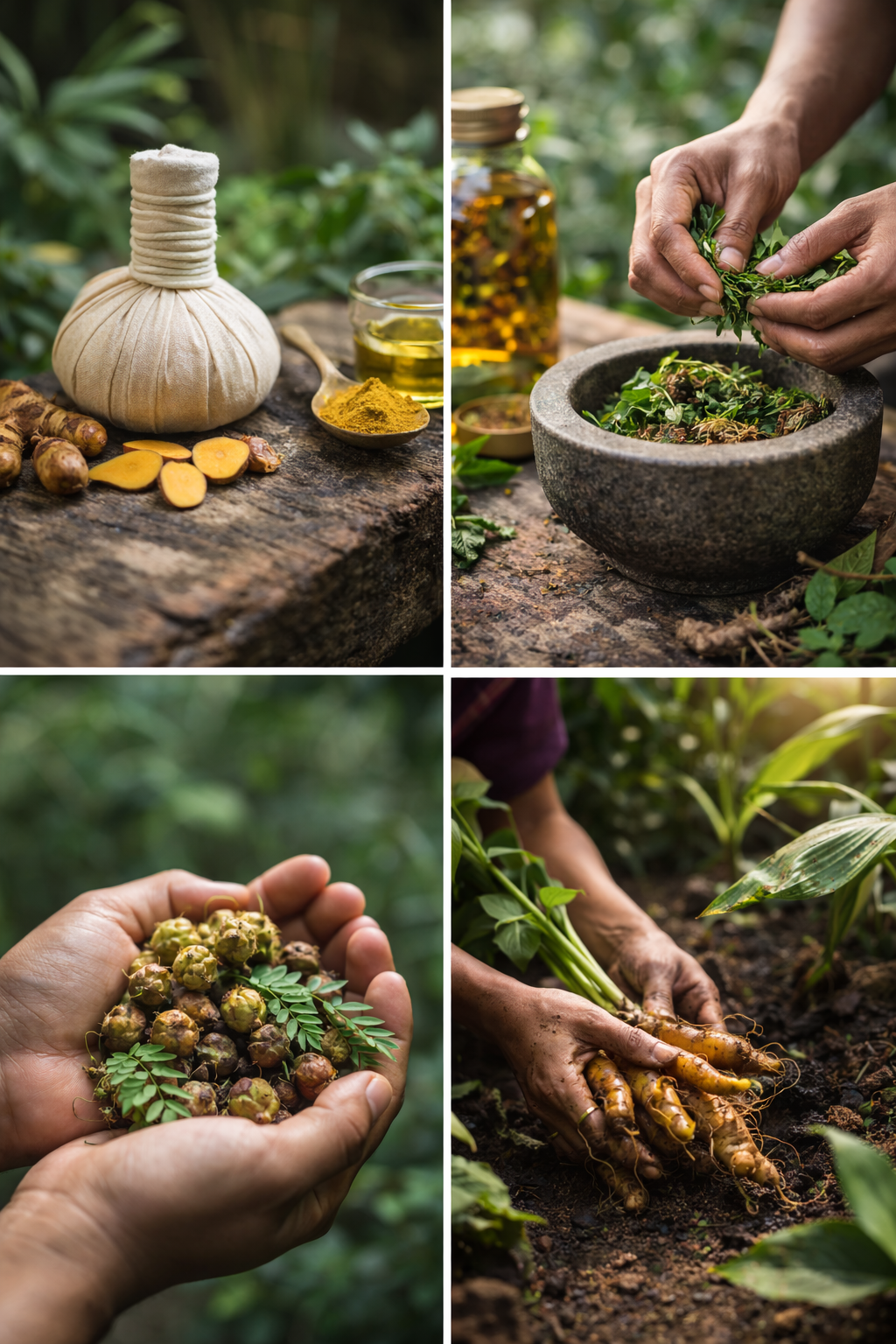
When used together—as they traditionally are in traditional Ayurvedic protocols—plants work synergistically to support multiple steps of detoxification and elimination, as well as supporting pathways for health and longevity.
Ayurvedic Herbs and Modern Science
Modern research is beginning to clarify what Ayurvedic physicians observed clinically for centuries. Ayurvedic formulations typically include a variety of herbs in smaller amounts to avoid risks associated with higher doses of an individual herb. In addition, Ayurvedic pharmacology is very precise in the proportions of individual herbs used in combination, and research is ongoing to understand the wisdom of these sophisticated formulations from a scientific perspective.
Returning to a Complete Healing System
As we begin to better understand the mechanisms behind these herbs, we are reminded that the plant world is not simply a source of remedies—it is a source of nourishment and partnership in healing. There is much to be learned by exploring Ayurvedic herbal formulations and their traditional uses to support and optimize health. By reconnecting with nature through the intelligent and respectful use of plants, we can restore a more balanced, sustainable, and compassionate approach to health—one that honors both ancient wisdom and modern science.